


















How Qarma changes it
Rank Your Suppliers
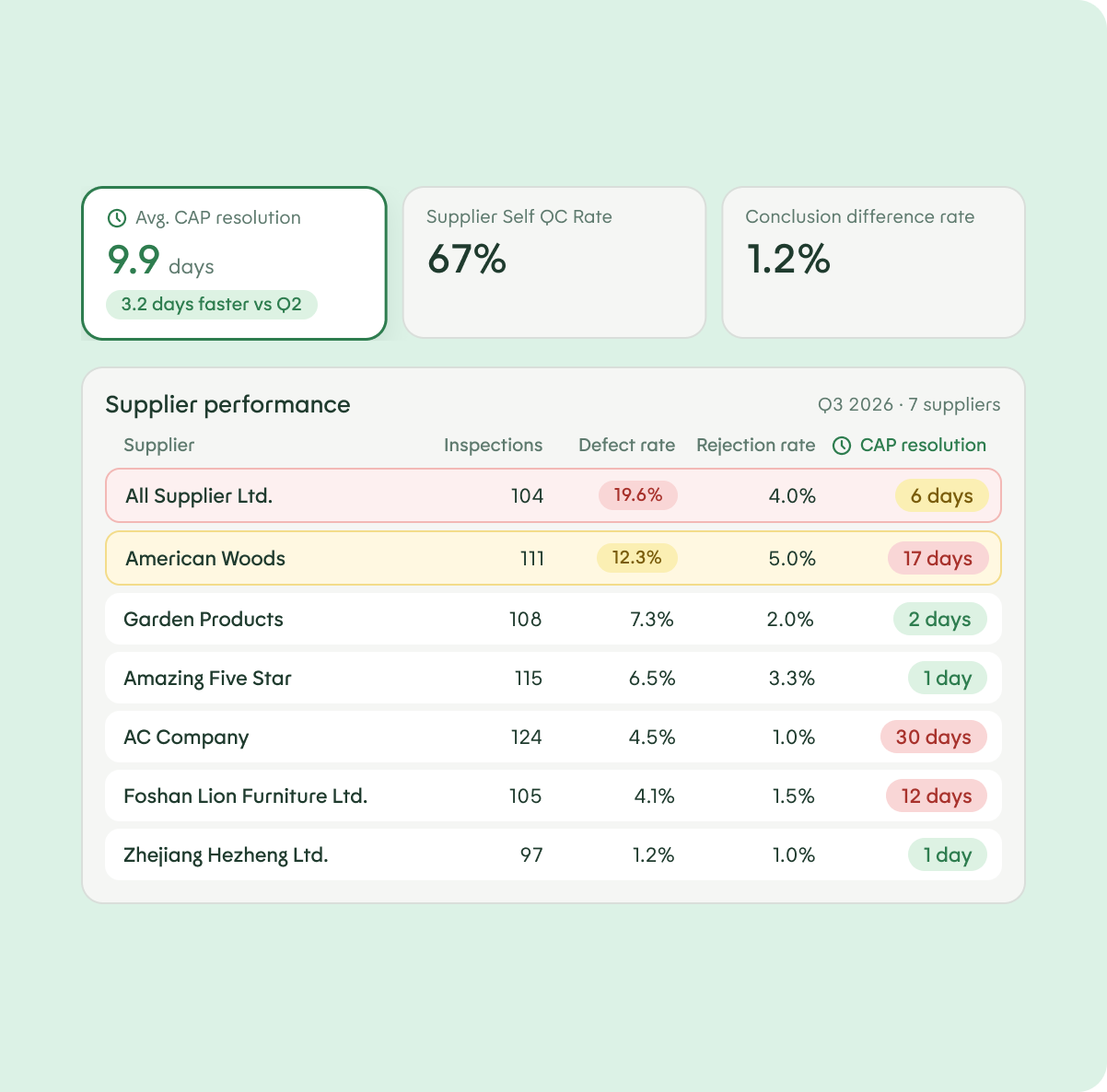
Supplier scorecards built from real inspection and defect data.
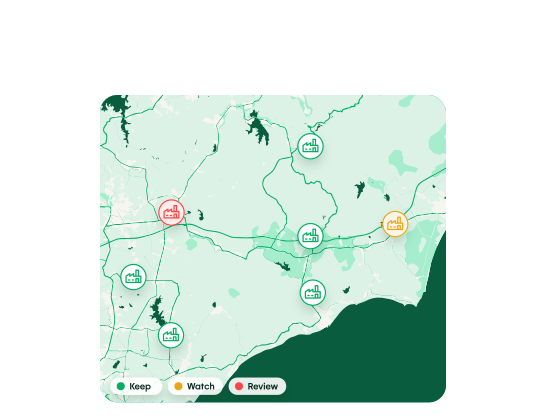
Benchmark every supplier on defect rate and inspection turnaround time in one view. GPS-confirmed inspections and time-stamped photos back every number, so the comparison actually holds up when someone asks you to defend it. The same visibility applies to compliance. See supplier certification status and product documentation in one place, so you know exactly who's covered and what's about to expire.
Know Your Data
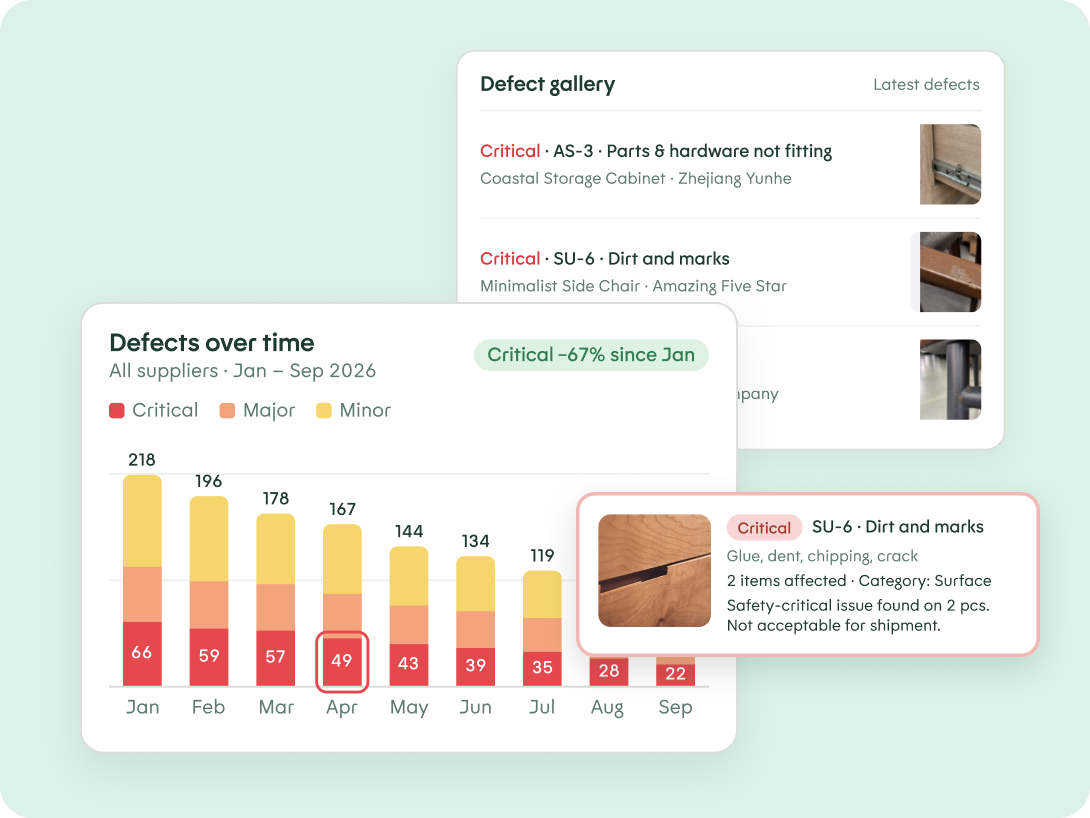
See where you should focus your attention.
One dashboard covers inspection trends, defect severity, supplier and inspector performance, and a defect gallery you can browse photo by photo, so you can catch problems fast and track real improvement over time.
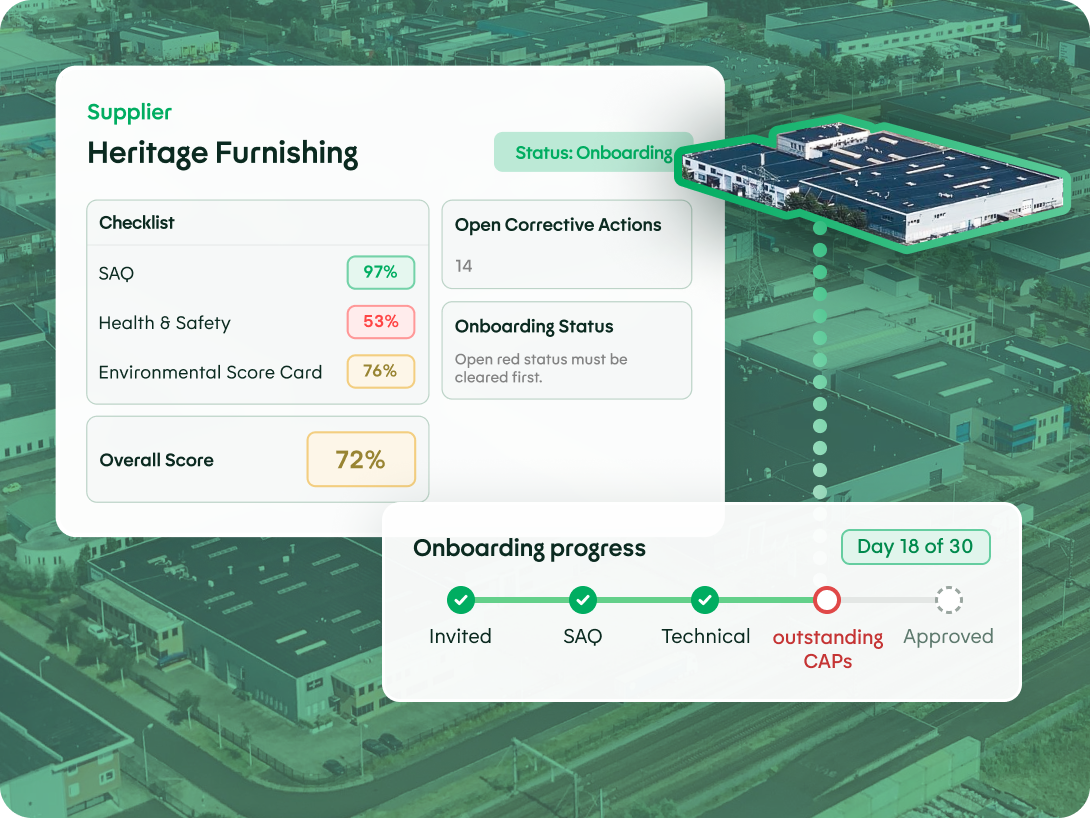
Faster Supplier Onboarding
Vet a new supplier in days, not months.
Every new supplier starts with the same standardized inspection and documentation process, so you're comparing new factories on equal footing from day one, not waiting on whatever paperwork they happen to send over.
Choose Suppliers With Confidence
Volume, quality, and responsibility, all backed by data.
Inspection and audit data shows whether a supplier can manage your order volume, deliver consistent quality, and meet the ethical and social standards your customers expect. Commit to the right partners from day one.
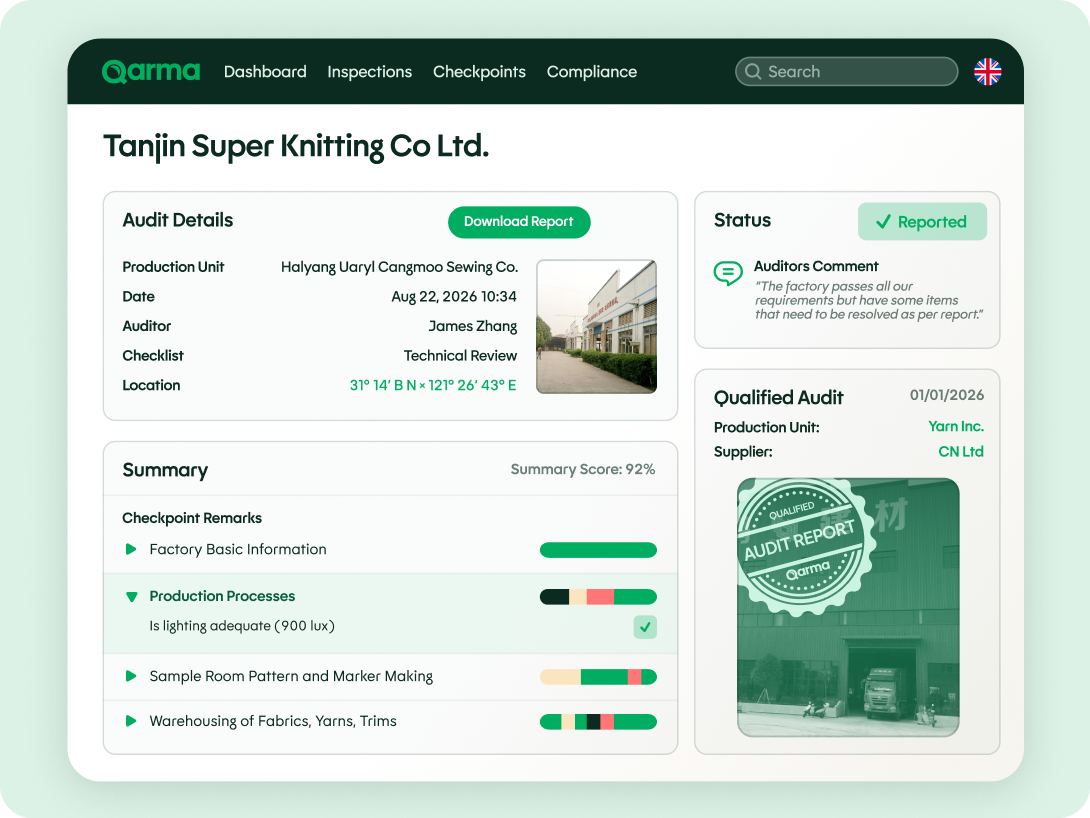
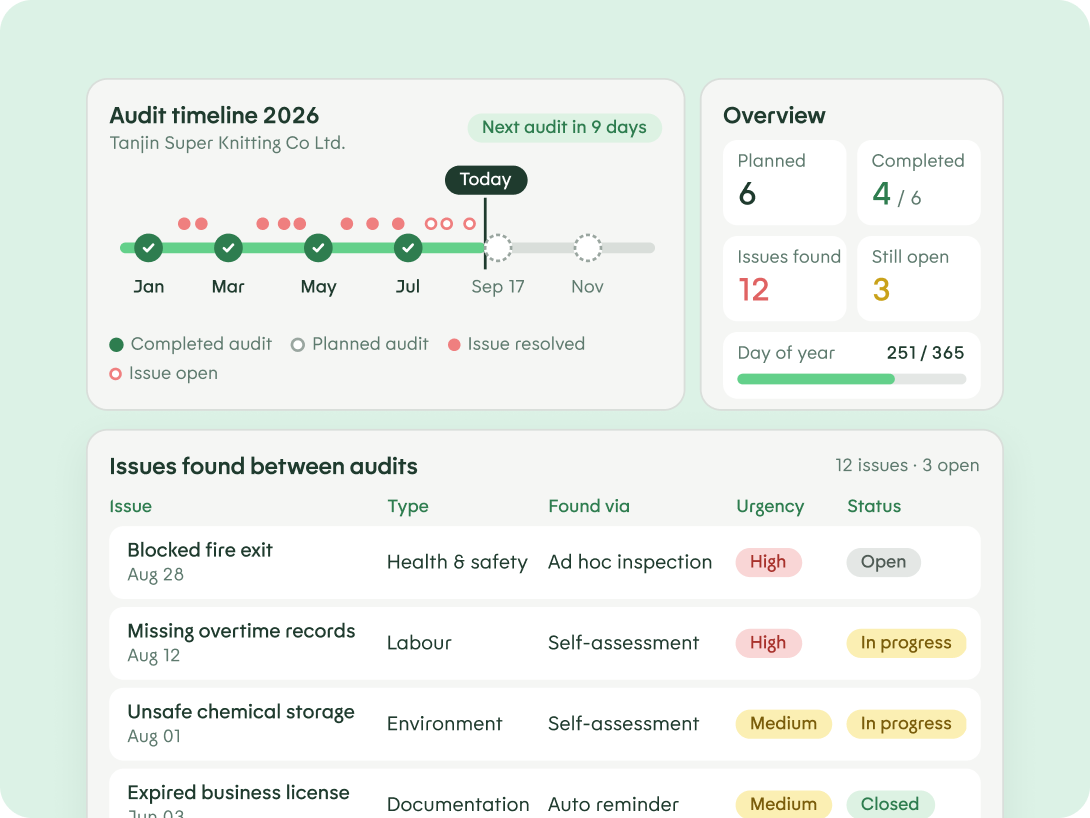
See the Whole Picture, Every Day of the Year
Know where every supplier stands on all 365 days.
You might run one social compliance audit a year, but that can't catch what happens in between. Qarma fills the gap with ongoing self-assessments and inspections, so you know your supplier base is holding up between formal audits.