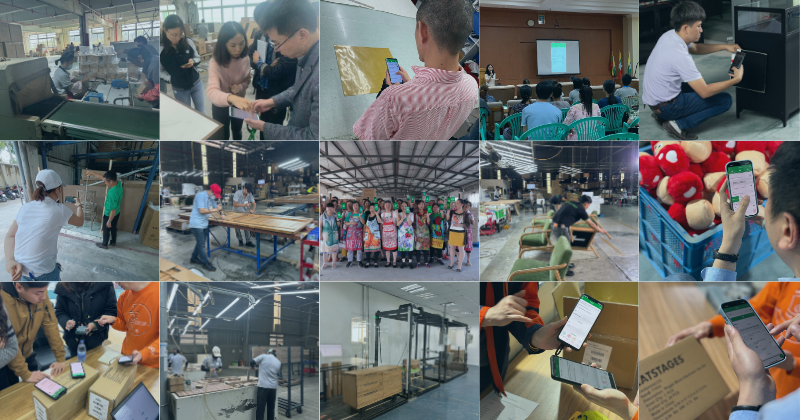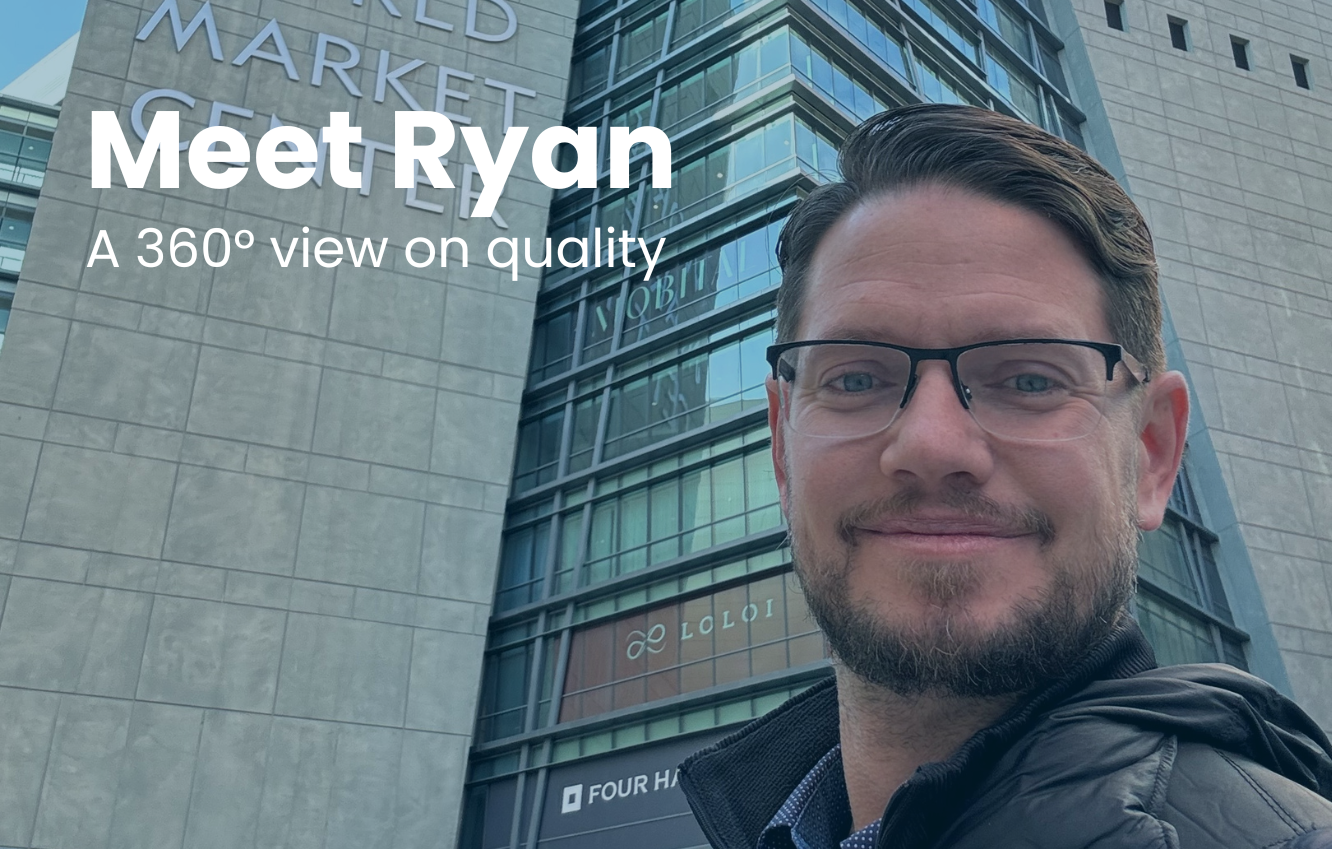
Before joining Qarma, Ryan Turley had already spent two decades in the brand and manufacturing world. From the floor of a warehouse to the boardroom of global sales, he’s handled almost every part of the product journey. Logistics, customer service, operations, supplier relations, quality control (QC) – he’s worn every hat, and that’s exactly what gives him his unique 360° perspective on quality today.
“I’ve worn a lot of hats,” Ryan says. “I’ve worked across so many roles that I really understand all the details and specifics that go into building a company.”
Today, as Director of Customer Relations for the US and Canada at Qarma, Ryan brings that full-circle perspective with him, now helping brands strengthen their QC set-ups, simplify compliance, and build more transparent supplier relationships.
Quality is everything that surrounds the product
For Ryan, quality has never been just about what ends up on the shelf. It’s about every stage of the process – from materials and engineering to inspection and communication. Every step count, because every step can fail.
“Quality is everything that surrounds the product,” Ryan says. “So not only the materials that go into it, but the engineering of the product, and then what comes out of it with the finished product. There are so many different hands, parts, pieces of machinery, that go into making a finished good that a lot can go wrong.”
Ryan’s experience has shown him that quality issues rarely come down to a single mistake. They’re usually the result of missing information, unclear responsibilities, or teams working in silos. “There are so many points where things can break down,” he explains. “Once you start connecting the data and the people behind it, you can see where things really go wrong – and how to fix them before they get out of hand.”
That perspective has shaped how he now works with Qarma’s customers. Rather than focusing only on the end product, Ryan helps brands look upstream – into the systems and routines that shape quality long before a shipment is packed.
System flexibility
One of the things Ryan appreciates most about Qarma is how flexible the system is. Having worked in so many different roles, he knows that no two companies – or even two factories – ever run their QC processes the same way. Some inspect by purchase order (PO), others by SKU. Some rely on third-party inspectors, while others manage everything in-house.
“We can customize Qarma for your unique setup,” Ryan explains. “Whether you do inspections by PO or by SKU, we’re agnostic. Where other competitors require you to use their QC teams, Qarma has unlimited users.”
That adaptability allows brands to shape Qarma around their own workflows rather than forcing everyone into a single template. For Ryan, this flexibility isn’t just a convenience – it’s essential for adoption and long-term success.
“Every customer has their own way of doing things,” he says. “Some want to separate teams by category or by supplier, others by region. Qarma can handle all of that without breaking the system.”
He’s seen this flexibility make a real difference. One customer recently adjusted a single checklist more than thirty times within a few months – refining, improving, and customizing as they learned more about their production challenges.

From reactive to proactive
For many brands, QC has long been a reactive process – finding and fixing problems after they happen. But Ryan believes that mindset is changing, and tools like Qarma are helping drive that shift.
“Once you start connecting the dots – the data, the people, the processes – you can see what’s really happening,” Ryan says. “You can identify where things go wrong before they become problems. That’s when you stop reacting and start improving.”
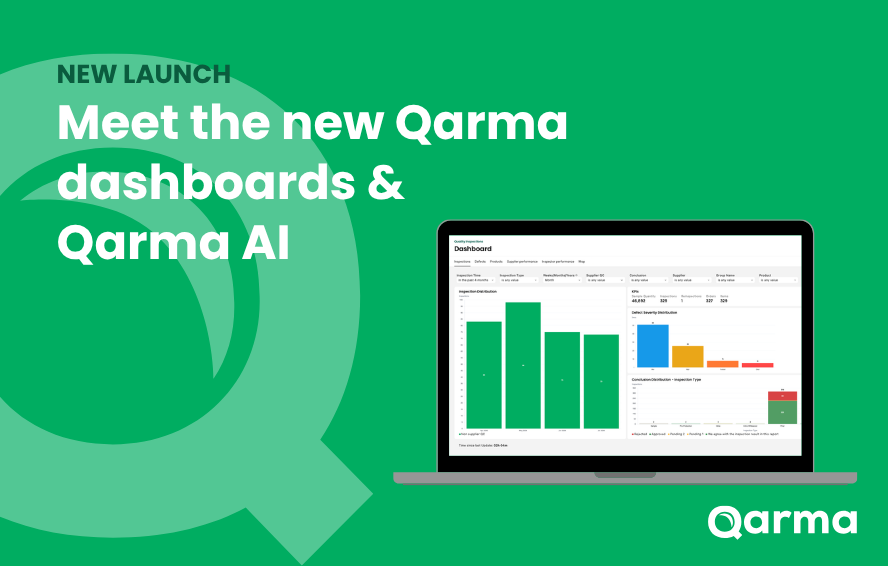
This proactive mindset is also what’s behind Qarma’s newest AI feature, the AI Checkpoints tool. Instead of relying purely on static checklists or the memory of an inspector, the system uses historical inspection data to learn, evolve, and suggest additional checkpoints.
“The AI feature allows you to be more proactive in your checklists,” Ryan explains. “So that the checklist isn’t static – it can start to add additional checkpoints as new defects are discovered.”
For Ryan, this kind of technology represents more than just smarter software – it’s a new way of thinking about quality itself. By combining human experience with data-driven insight, teams can make faster, more confident decisions and spend less time putting out fires.
“Technology should make people better at their jobs, not replace them,” Ryan says. “It gives inspectors and managers the information they need to focus on what really matters – preventing issues instead of reacting to them.”
The future of quality
From his perspective, Ryan sees regulatory pressure only increasing in the years ahead.
“In the U.S., there are so many regulations and compliance requirements for any product,” he says. “Every product has some sort of compliance and regulatory component built into it – and we’re seeing the same thing happening in the EU.”
That growing complexity is exactly where Ryan sees Qarma making a real difference. With the Compliance Module, brands can keep track of every requirement attached to their products, SKUs, and PO’s and know instantly what’s approved, what’s expiring, and what still needs attention.
“With thousands of SKUs, each with multiple compliance requirements, it can be almost impossible to track manually,” Ryan explains. “Qarma automates the process, notifying the right people before a certification expires, so nothing slips through.”
And as new regulations continue to emerge – from California’s Prop 65 to upcoming EU sustainability rules – Ryan believes flexibility and automation will be key.
“Our regulatory environment isn’t slowing down,” he says. “The more we understand about how products are made, the more compliance requirements will follow. Tools like Qarma help brands stay ahead of those changes instead of constantly playing catch-up.”
As a final thought, Ryan highlights three key principles for companies looking to strengthen their quality processes.
First, always put quality first. It’s easy to get distracted by design ambitions, fast delivery, or pressure to cut costs – but when quality slips, everything else eventually follows.
Second, ensure that checklists and defect codes are structured and harmonized across manufacturing teams. When everyone works from the same framework, the data becomes far more valuable and provides clearer insight for improvement.
Finally, look as far upstream in the manufacturing process as possible. Quality shouldn’t start at the final inspection. By adding checkpoints earlier in production, brands can reduce the number of defects later on – and ideally eliminate them before products reach the customer.
Want to see Qarma in action?
We’d love to show you how you can strengthen your QC processes, book a demo here