How corrective actions closes the feedback loop in quality control
Corrective actions are where quality control (QC) moves from inspection to improvement.
Noticing a scratch, a failed function test, or a packaging error is important – but what really matters is what happens next. Is the issue resolved? And more importantly: how do you prevent it from showing up again in the next batch?
For many QC teams, the challenge isn’t finding the defect it’s following up in a way that’s clear, structured, and actually leads tochange.
Corrective actions are structured responses, not quick fixes
A corrective action isn’t just a follow-up. It’s a structured response to a non-conformance or error that aims to eliminate the root cause, not just the symptom.
That means the goal isn’t to patch, but to prevent. And that requires a process not just intent.
A corrective action ensures the problem is understood, the solution is specific, and lessons are captured so the issue doesn’t repeat elsewhere.
Why corrective actions are critical to quality
Without structured follow-up, the same issues may keep returning sometimes in a different factory, format, or team.
Corrective actions are what turn inspections into learning, reduce repeated defects, and strengthen accountability. They also support compliance and traceability in an increasingly regulated landscape.
Make a corrective action flow
Without corrective actions, the same defect may reappear in another factory, another order, or another version of the same product.
Corrective actions help make quality consistent not just inspected. They reduce rework, build trust with suppliers, and support traceability in increasingly regulated industries. They’re also essential for internal learning and continuous improvement.
Effective corrective actions start with clarity: what went wrong, and why? Then comes ownership, implementation, and follow-up. But in practice, this often breaks down – when things are too manual, disconnected, or undocumented.
That’s where tools like our Quality tool can make a difference. With our tool, your team can log a finding and turn it into a corrective action with one click – assigning it, tracking it, and verifying it, all in the same workflow.
No more chasing emails or spreadsheets, just a direct link between what’s spotted and what’s done.
Corrective actions as part of your quality processes
Corrective actions often fail not because of intent, but because the process breaks down. Handovers get lost, photos are buried in emails, and no one’s sure who’s responsible for what.
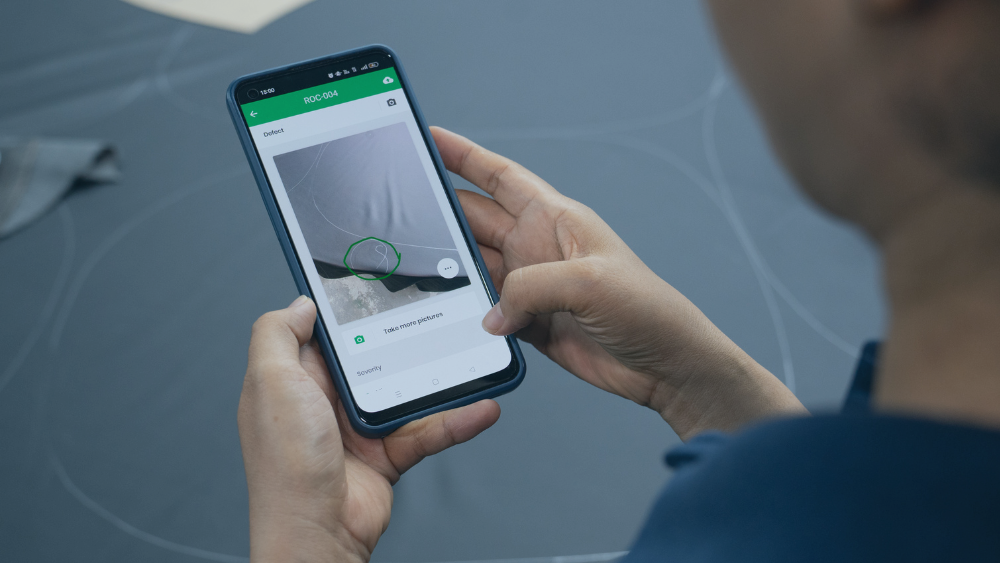
Qarma changes that by turning every inspection into a traceable improvement process in a few clicks. With one connected flow, you can trigger a corrective action directly from a defect, assign it to the supplier, and monitor progress – all from the same place.
Suppliers respond with documentation, photos, or video evidence right from the app. And because everything is logged and linked back to the original issue, there's no guesswork, no gaps – just visible progress and shared accountability.
This means less time chasing updates, and more time solving problems. But more importantly, it builds a system where every issue feed improvement.
Prevent defects by learning from historical data
When done right, corrective actions become more than clean up. They create a system where every mistake leads to improvement and every improvement strengthens the next one.
With our AI Checkpoints your previous defects will automatically be added in the checklist to make sure you are proactively ahead of these for upcoming checks.
Bring structure and visibility to your corrective actions with Qarma
Corrective actions are most effective when they’re part of your daily QC flow. That’s why Qarma makes it easy: from any inspection report, you can trigger a corrective action with just a few clicks.
Select the defect or checkpoint, assign the action to your supplier, and follow it through to resolution – all within the same workflow. Suppliers can upload photo or video evidence directly via the app, so every action is documented and traceable.
The result? A clear connection between what went wrong and how it was fixed. No guesswork. No manual follow-up. Just visible progress, shared accountability, and continuous improvement – built into your process.