If you import consumer products into the United States, one deadline should be front of mind right now: July 8, 2026. That's the date the CPSC's mandatory e-Filing rule takes effect, and it changes how product safety compliance works at every U.S. port of entry. Here's what you need to know:
1. What Is e-Filing?
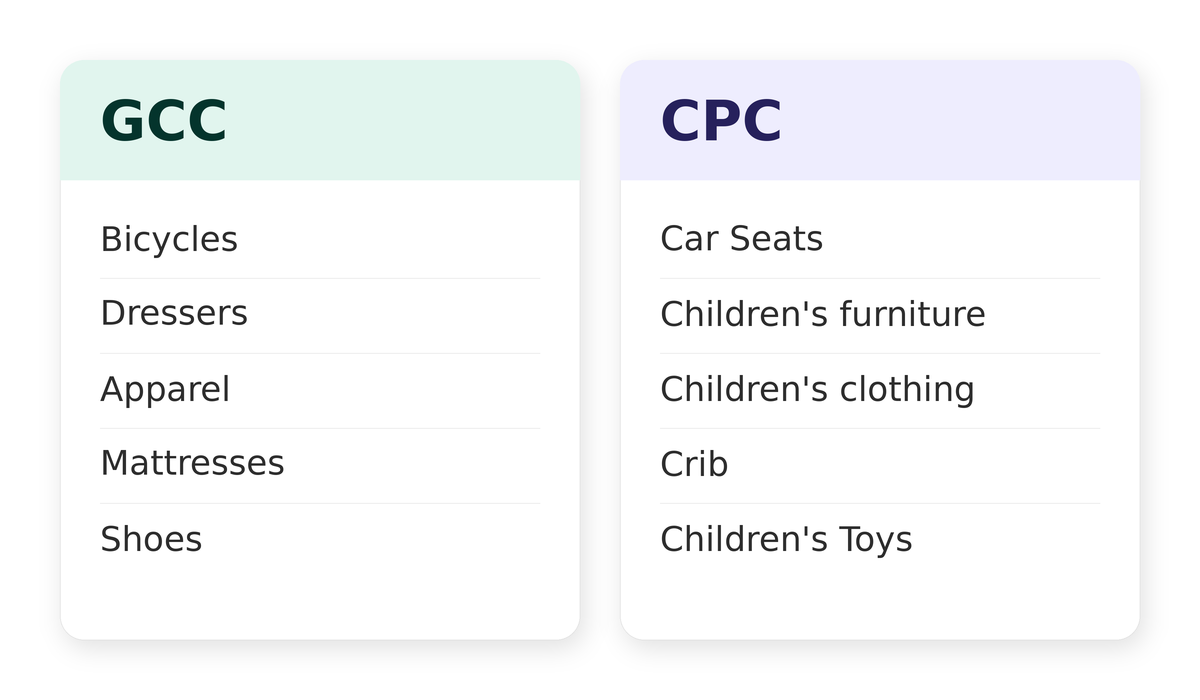
For nearly two decades, importers of regulated consumer products have been required to hold Certificates of Compliance either a Children's Product Certificate (CPC) for children's products, or a General Certificate of Conformity (GCC) for regulated general-use products. Under the old system, these only needed to be available upon request.
That changes on July 8. Under the new rule, certificate data must be submitted electronically through U.S. Customs and Border Protection's ACE (Automated Commercial Environment) system at the time of import entry. CPSC will use this data to assess shipment risk and target inspections. Compliant importers benefit from faster clearance; non-compliant ones’ face holds, penalties, and potential seizure.
Also note: Products entering from a Foreign Trade Zone (FTZ) have a later deadline of January 8, 2027.
GCC vs. CPC: Which applies to you?
A CPC covers products primarily intended for children under 12 (toys, children's apparel, cribs, car seats, children's furniture, and more) and requires third-party lab testing. A GCC covers regulated general-use products subject to specific CPSC rules, things like furniture, apparel, mattresses, consumer electronics, and more. Both must now be eFiled.
2. How to Submit on the CPSC
There are two submission methods via ACE:
- Full PGA Message Set – all certificate data is submitted directly in ACE for each entry. Best for lower-volume or one-off shipments.
- Reference PGA Message Set – certificate data is uploaded once to the CPSC Product Registry, and a reference number is submitted for each subsequent entry. Best for recurring shipments of the same products.
To get started, register your business at cpsc.gov/eFiling. CPSC’s Voluntary Stage is open now and lets you test your setup before the mandatory deadline – currently only around 500 of 2,000 available spots have been filled, so there’s still time to get familiar with the system before it becomes mandatory.
Important: Once an entry has been submitted, it can only be edited within a 48 hour window. Double-check all fields – including HTS codes, applicable standards, and testing information – before certifying.
Step-by-step: Setting up in the CPSC Product Registry
If you’re using the Reference PGA Message Set (recommended for recurring shipments), you’ll first need to set up your product data in the CPSC Product Registry. Here’s how the process works:
Step 1. Add your product collections and trade parties
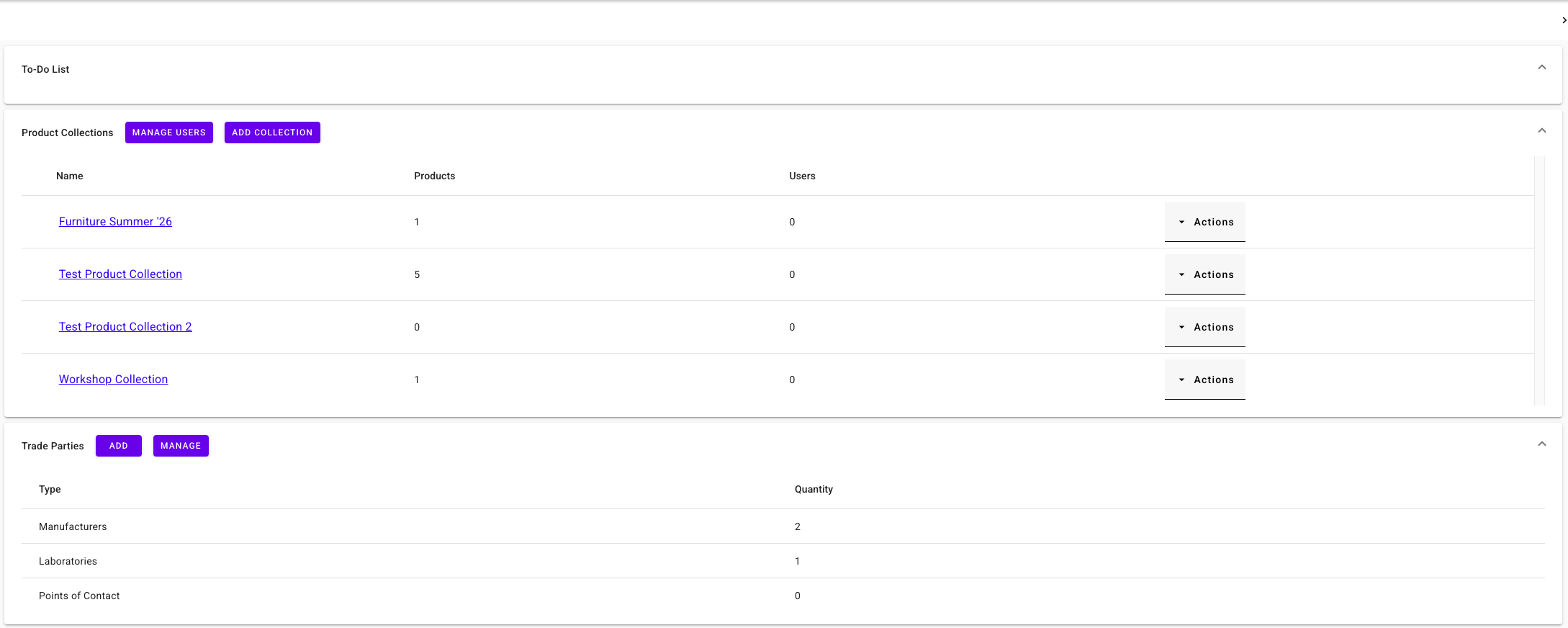
Step 2. In your product collections add a product
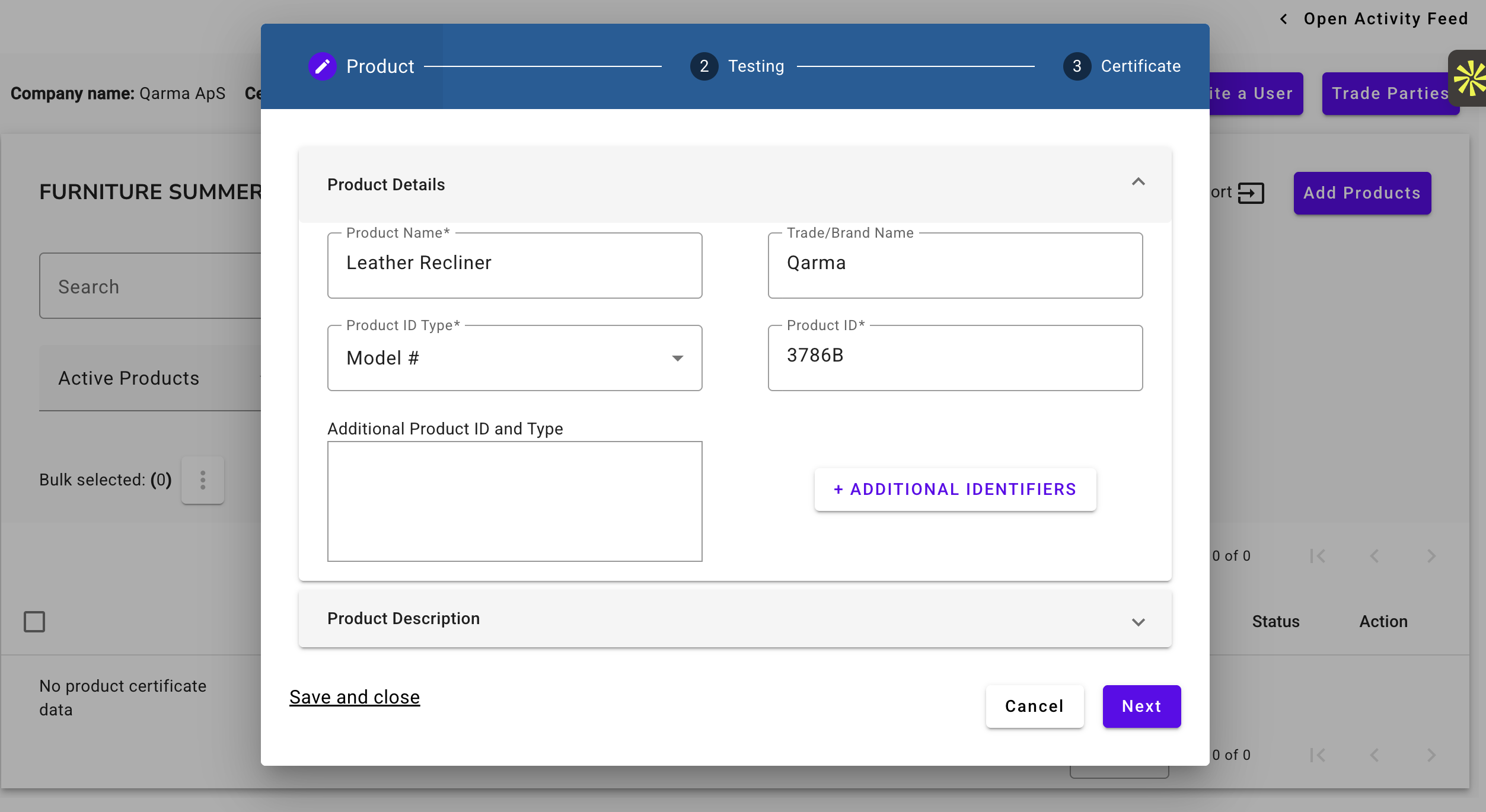
Step 3. Add your products and link them to the relevant manufacturer
Within each product collection, add the individual products you import and associate them with the correct manufacturer record. This is also where you’ll enter product descriptions and identification details.
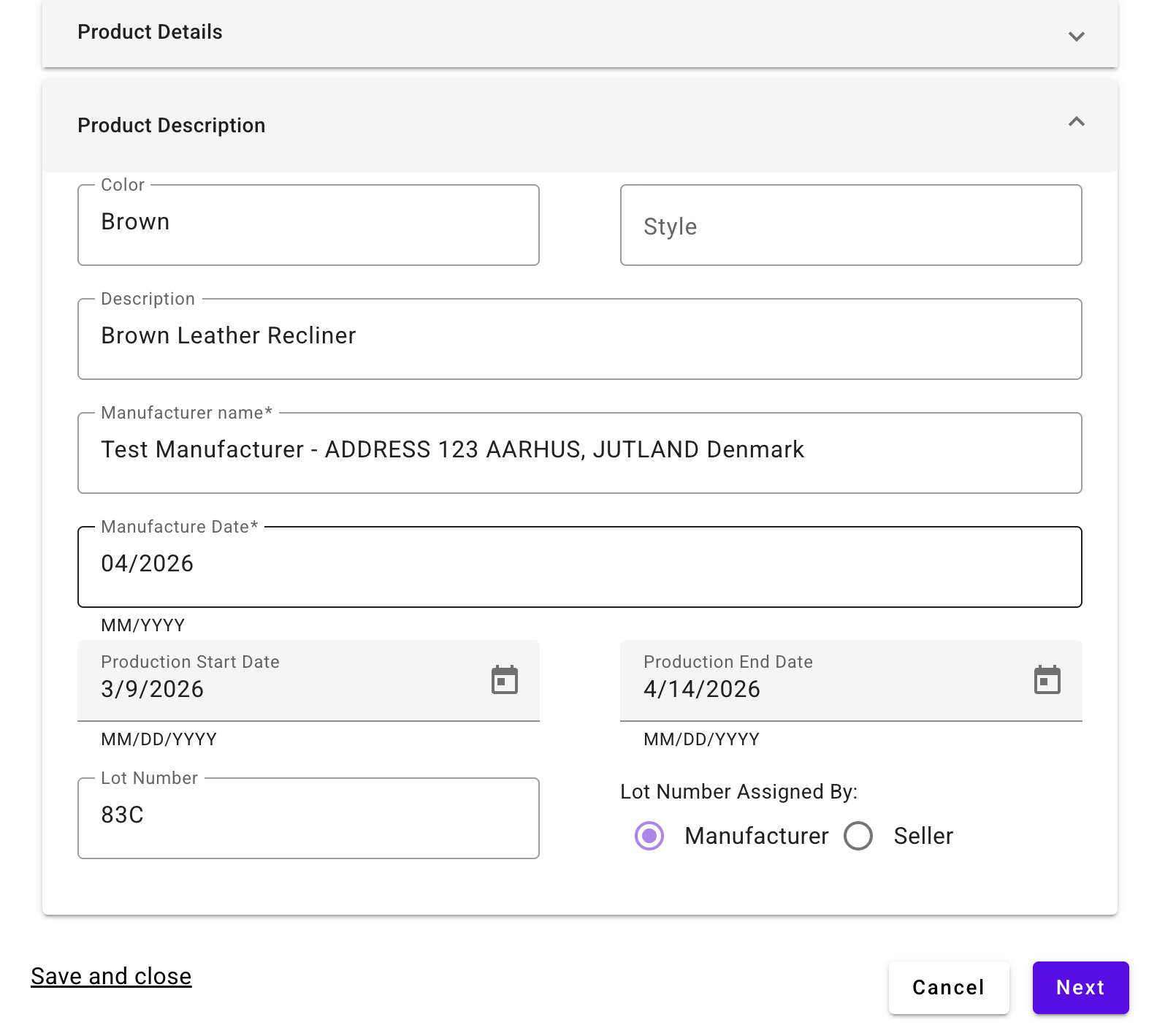
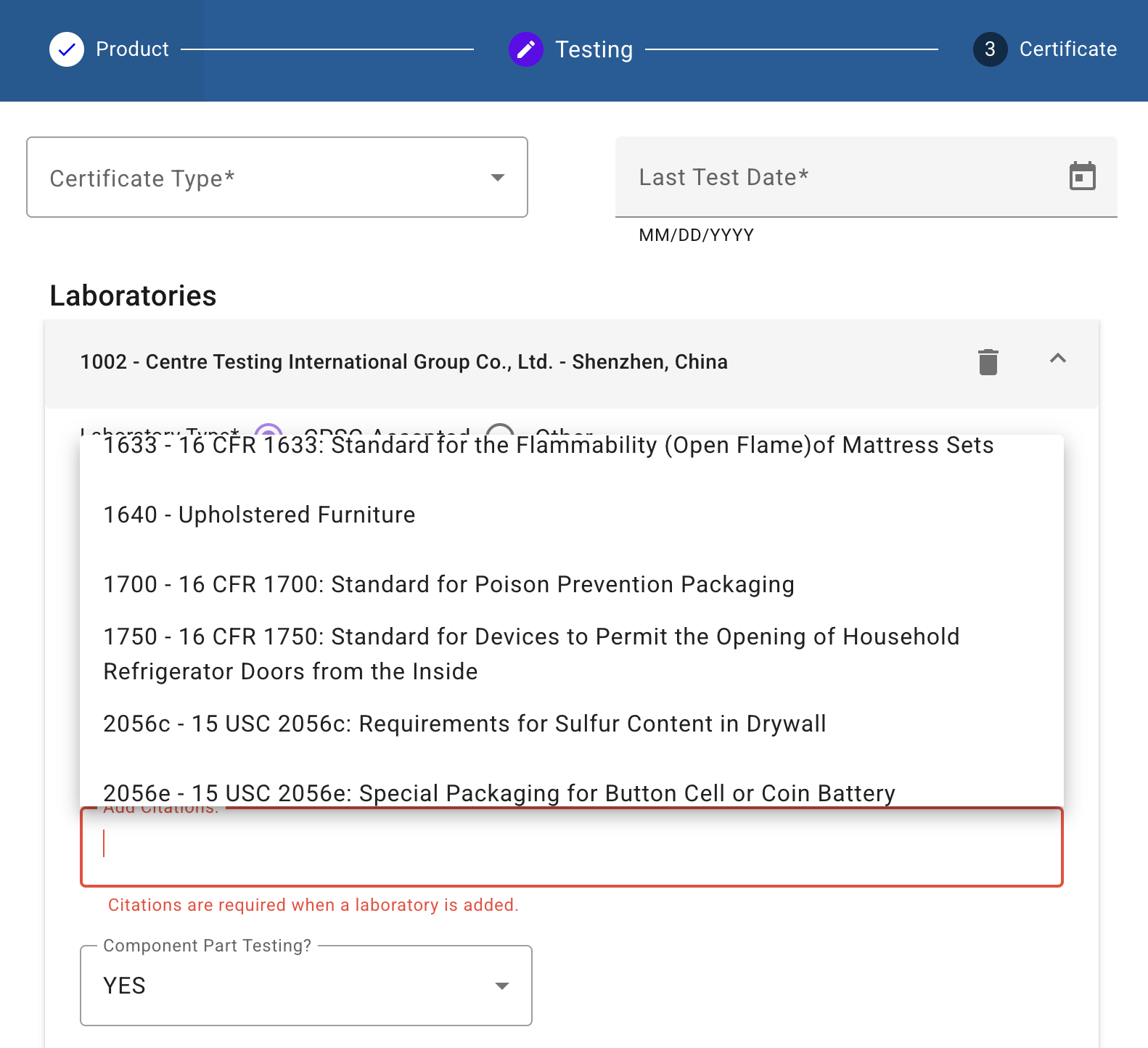
Step 4. Add testing information and certify
For each product, enter the applicable test reports – including the lab name, accreditation details, and test dates. Make sure all relevant HTS codes are included. Once everything is complete, a designated point of contact certifies the entry. At that point the status moves to “complete” and the record is locked – no further edits are possible.
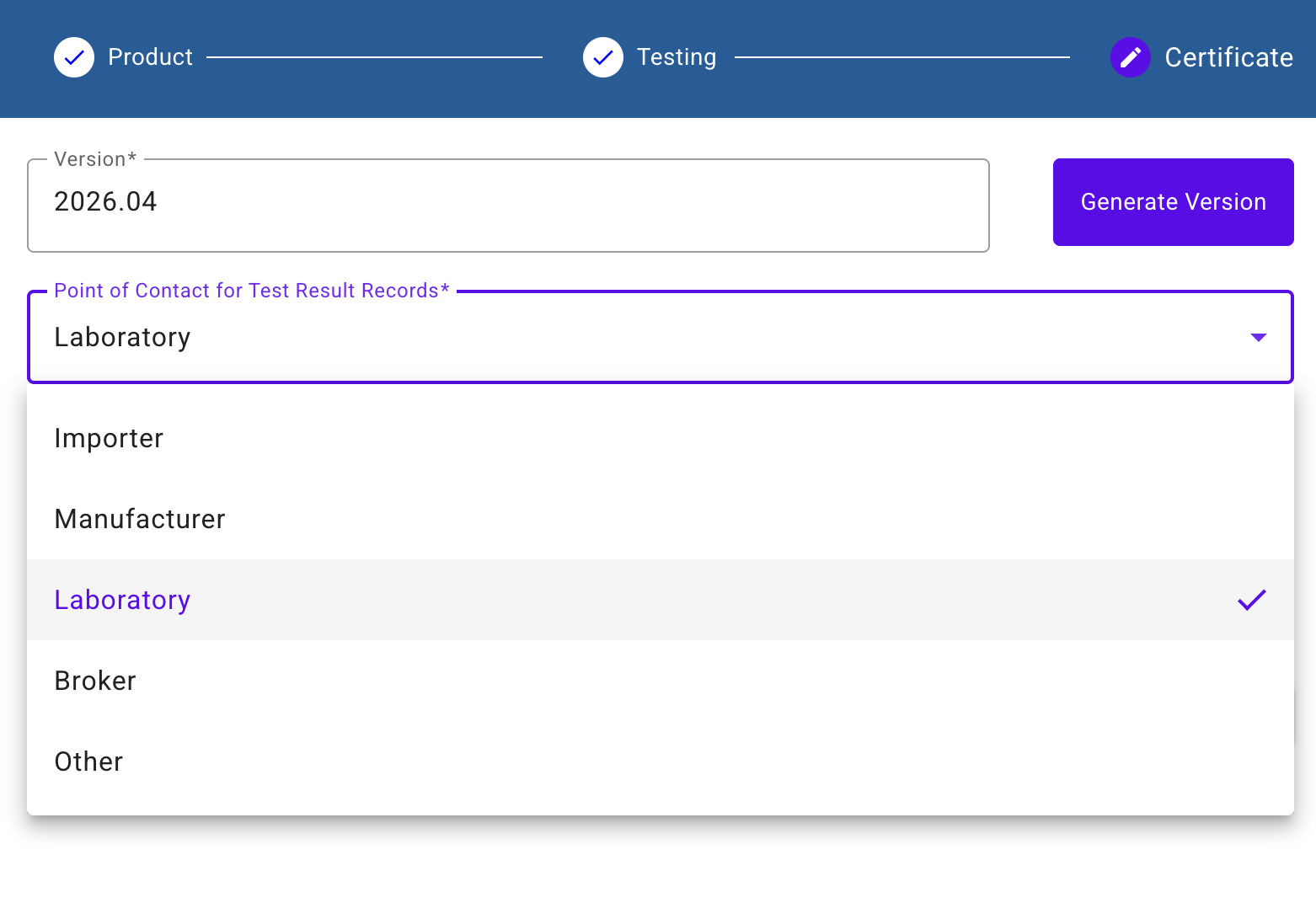
Step 5. Select the certifying point of contact:
Assign a responsible party to certify the entry. This is usually the importer themselves or designated accredited labs. Once certified, the status is locked and no further changes can be made.
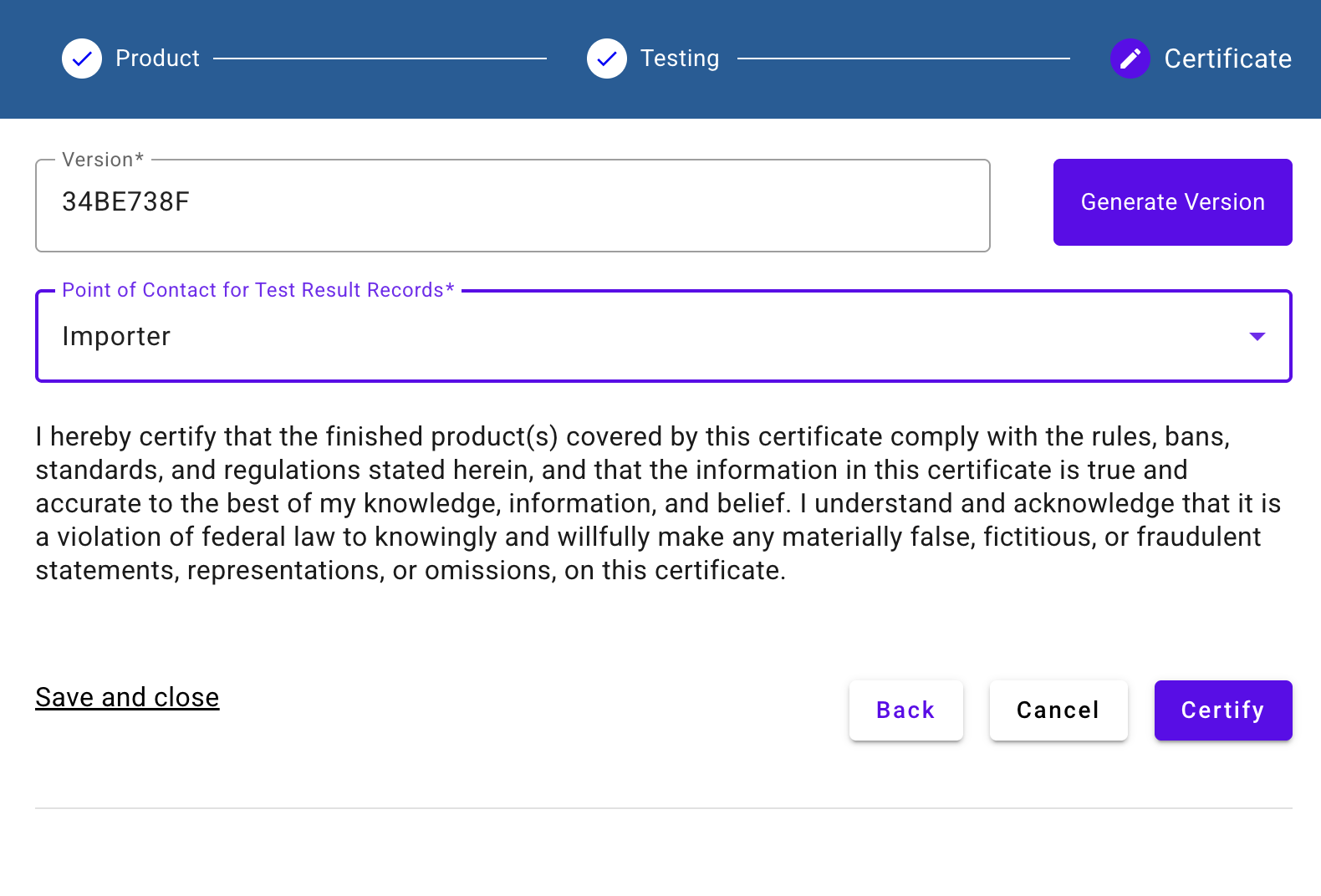
Saved:
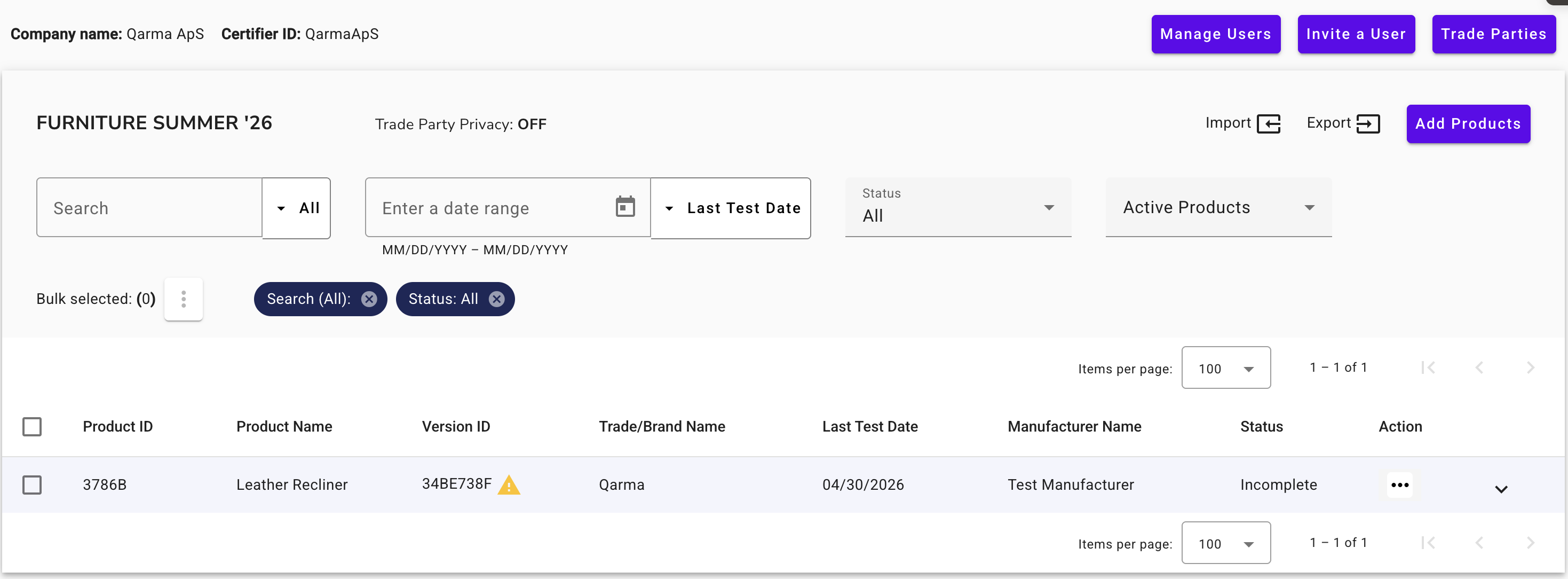
Certified:
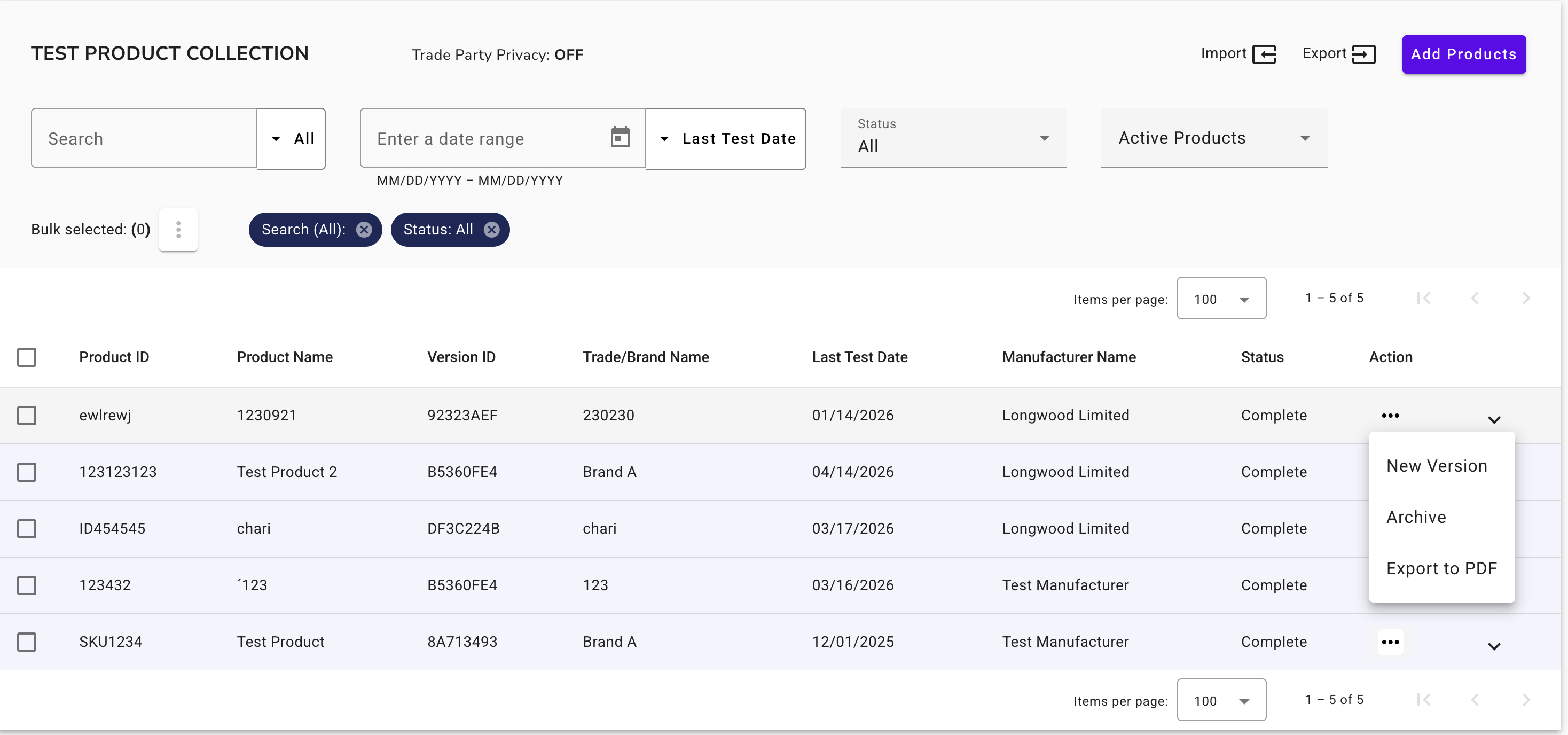
Prefer to upload in bulk? You can also submit product data via CSV file:
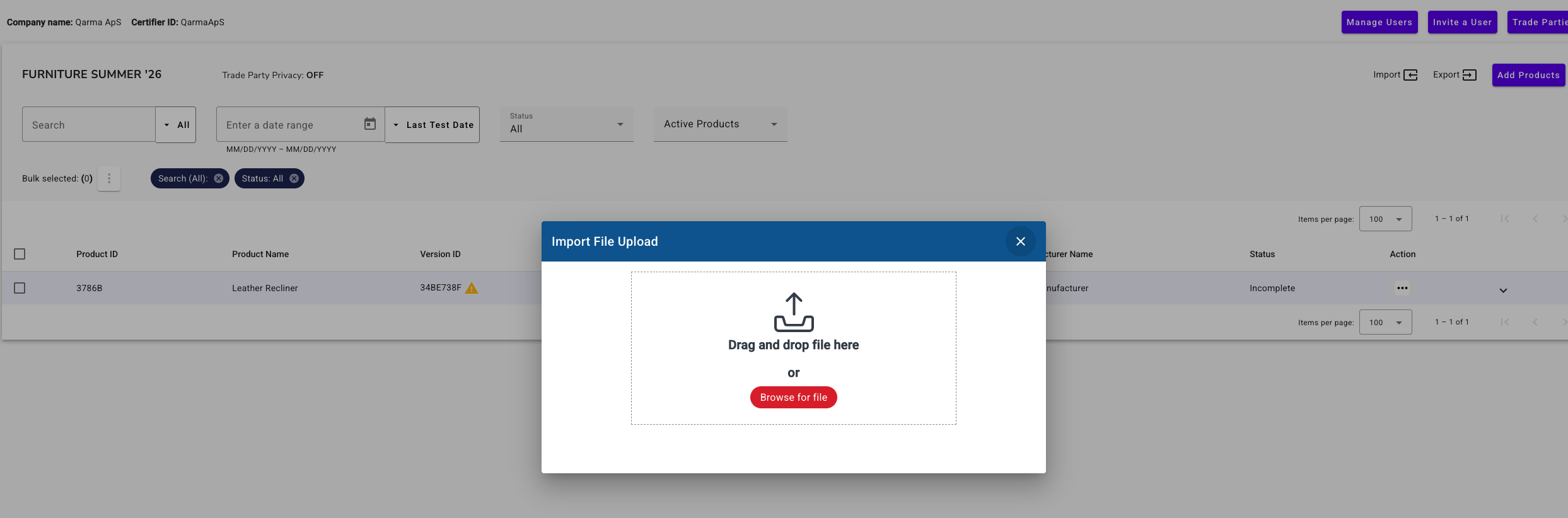
Be sure to include all relevant HTS codes - shipments under flagged codes without certificate data will likely trigger a hold
3. What Needs to Be Included
Whether using the Full or Reference method, your submission must include:
- All applicable CPSC safety rules and standards the product is certified against (the most commonly missing field)
- Certificate type (CPC or GCC)
- Product description and identification
- Manufacturer and importer information
- Testing laboratory name, accreditation, and test dates
- Date of manufacture or production period covered
Products subject to multiple standards for example, a children's toy covered by both the Safety Standard for Toys and the Lead Paint ban must cite every applicable rule. CPSC has also published a list of ~600 flagged HTS codes; shipments under these codes without certificate data will trigger an automatic warning and are more likely to be held for examination.
4. Common Problems and How to Avoid Them
Incomplete certificate citations
Listing every applicable CPSC standard is the step most often missed. Use CPSC's Regulatory Robot tool to verify which rules apply to each product, and ensure your certificates cite them all explicitly.
Outdated certificates
Certificates issued before the 2025 Final Rule may be missing required fields. Audit your existing CPCs and GCCs now don't wait until June to find out they need updating.
Suppliers not providing data
Certificate data originates with the manufacturer. Send formal data requests to your factories now, with a clear deadline and a list of required fields. For overseas suppliers, consider providing translated guidance.
"But my shipment is under $800..."
De minimis shipments are not exempt. The e-Filing requirement applies to all regulated consumer products, regardless of value.
"What if there has been a material change"
If you make a material change, that is a change to the product’s design, manufacturing process, or source of components to the product, you must submit for new testing and apply for a new certification.
Qarma helps you keep product compliance documentation audit-ready so when July 8th arrives, you're not scrambling.